EMC Protection: Control Systems Solutions in Water Utility Environments
Modern water and wastewater facilities depend on clean, reliable electrical signals. As VFDs, PLCs, SCADA networks, instrumentation, and industrial communications become more interconnected, electrical noise can interfere with the systems responsible for monitoring and controlling the process.
DEHN helps engineers and utilities improve electromagnetic compatibility — EMC — in water and wastewater control environments. A coordinated EMC strategy can help reduce electrical interference, improve signal integrity, and support reliable operation of automation infrastructure in demanding industrial conditions.
By combining surge protection, grounding, bonding, shielding, filtering, cable routing, and application-specific EMC practices, DEHN helps support control systems that perform more reliably under real water and wastewater operating conditions.
EMC Challenges in Water Utility Control Systems
Maintaining electromagnetic compatibility becomes more challenging as facilities expand automation, add VFD-driven equipment, and connect more field instrumentation to SCADA and PLC systems.
Common sources of electromagnetic interference include:
- Variable Frequency Drives — VFDs
- Large motor starting currents
- Generator and automatic transfer switch(— ATS) — operation
- Switching power supplies
- Long cable runs between field instruments and control panels
- Poor cable separation between power and signal wiring
- Inconsistent grounding or shield termination practices
Unlike transient surges, which occur as short-duration events, EMC issues often appear as intermittent communication faults, unstable measurements, nuisance alarms, or unexplained controller behavior that can be difficult to diagnose.
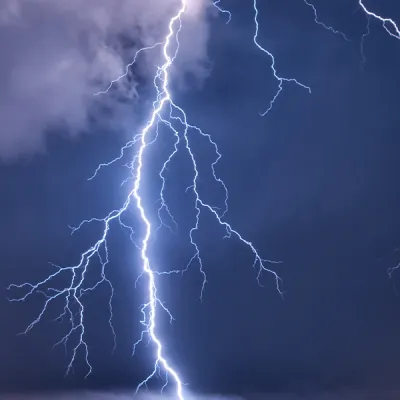
Conducted and Radiated EMI Require Different Protection Strategies
Effective EMC protection addresses two distinct types of interference. Conducted EMI travels through power, signal, and communication wiring, allowing electrical noise to propagate between equipment.
Radiated EMI is emitted through the air from high-frequency switching devices and can couple into nearby cables or electronic devices.
Cable routing, shielding, filtering, grounding, and equipment layout all contribute to overall EMC performance.
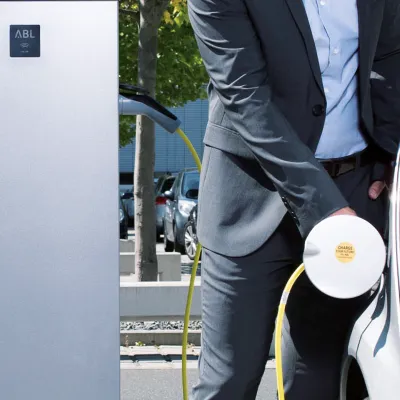
EMC Solutions for Water & Wastewater Applications
DEHN supports EMC performance through a coordinated approach that considers both equipment selection and system design.
Depending on the application, an EMC strategy may include:
- VFD EMI filters to reduce conducted electromagnetic emissions from variable frequency drives
- Proper separation of power and low-voltage control wiring
- Correct grounding of cable shields
- Ferrite cores and filtering for communication and signal circuits
- Panel layouts that minimize coupling between high-power and low-signal conductors
- Coordinated surge protection that complements EMC performance
- Grounding and bonding practices that reduce unwanted voltage differences
Rather than relying on a single product, these measures work together to reduce electrical noise throughout the control system.
Managing Harmonics and Electrical Noise Around SCADA Systems
Variable Frequency Drives have become standard throughout water and wastewater facilities because they improve pump efficiency and process control. They also introduce high-frequency switching that can affect nearby automation equipment when not properly managed.
A comprehensive approach considers the relationship between:
- VFD installation
- Cable routing
- Filtering
- Grounding and bonding
- Shield termination
- Sensitive PLC, SCADA, and instrumentation equipment
Addressing these factors during system design helps reduce communication errors, unexpected equipment behavior, and signal quality issues that may otherwise be attributed to software or instrumentation faults.
Each protection stage reduces the transient energy passed to the next, improving the performance of the overall system.
A typical protection architecture includes:
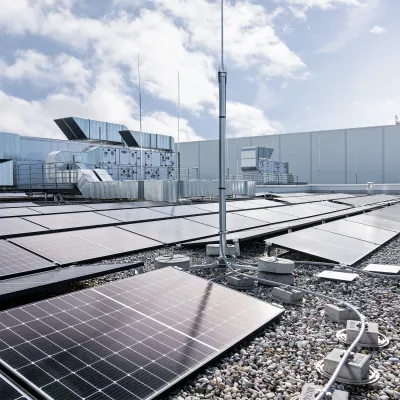
EMC Protection Is Part of a Complete Electrical Protection Strategy
EMC performance should not be evaluated independently from the rest of the electrical system.
Reliable control systems depend on properly coordinated surge protection, grounding and bonding, cable management, filtering, shielding, and panel design working together.
DEHN's engineering approach evaluates these elements as an integrated protection strategy rather than isolated components, helping engineers identify opportunities to improve long-term system reliability.
Ask About a Pump/Lift Station Surge Risk AssessmentIdentify EMC and Surge Exposure Before It Becomes a Control Problem
EMC issues are often rooted in cable routing, grounding practices, panel layout, or equipment coordination, or unprotected electrical pathways rather than a single failed device.
A Pump/Lift Station Surge Risk Assessment from DEHN helps identify exposed power, communication, grounding, bonding, instrumentation, and control pathways that may contribute to recurring SCADA faults, unstable measurements, nuisance alarms, VFD issues, and unplanned downtime.
The assessment helps utilities understand where improved surge protection, grounding, bonding, filtering, shielding, or cable management may support more reliable control system performance.
Ask About a Pump/Lift Station Surge Risk AssessmentDownload the Water & Wastewater Protection Toolkit
The DEHN Water & Wastewater Lift & Pump Station Controls & Telemetry Resilience Toolkit includes engineering guidance for evaluating surge pathways, grounding practices, electrical protection strategies, and control system vulnerabilities that support reliable control system performance.
Download the ToolkitFrequently Asked Questions
Do VFDs Cause EMI Problems in Control Panels?
Yes. VFDs generate high-frequency switching that can create both conducted and radiated electromagnetic interference. Without appropriate filtering, grounding, bonding, shielding, and cable separation, that interference can affect nearby PLCs, communication networks, and instrumentation.
What Causes Unexplained SCADA Errors and Communication Faults?
While software and hardware failures are possible, intermittent SCADA communication issues are often linked to electrical interference from VFDs, motor switching, poor grounding, inadequate shielding, or improperly routed signal cables.
What Is the Difference Between a Surge and EMI?
A surge is a short-duration overvoltage event, typically caused by lightning or electrical switching. EMI is ongoing electrical noise generated by equipment such as VFDs, motors, and switching power supplies. Both can affect control systems but require different mitigation techniques.
Why Are Water Utilities Especially Susceptible to EMC Issues?
Water and wastewater facilities often combine multiple VFD-driven pumps, long instrumentation cable runs, remote assets, and legacy control panels within the same electrical system. These conditions increase the potential for conducted and radiated interference if EMC principles are not incorporated into the design.