Why Pump and Lift Stations Keep Losing
SCADA Visibility—And How to Stop It
SCADA Visibility—And How to Stop It

A thunderstorm rolls through overnight. By morning, one of your pump or lift stations has dropped offline. SCADA has lost communication, the VFD has faulted, and the only way to know what is happening is to send someone to the station to check the wet well and equipment status in person.
If this sounds familiar, you may not be dealing with random equipment problems. Many of these events are caused by transient voltage entering the station through power, communication, or instrumentation circuits. The result is not always catastrophic failure. It often starts with lost telemetry, nuisance faults, and equipment that becomes less reliable over time.
DEHN helps utilities identify surge exposure points so pump and lift stations can remain more visible, reliable, and recoverable during transient voltage events.
Lift Station SCADA Reset Troubleshooting: Why It Keeps Happening After Storms
A lightning strike does not have to hit your station directly to cause problems.
Transient voltage from nearby lightning activity, utility switching, or electrical events inside the station can travel through power and communication wiring. Sensitive equipment, such as RTUs, PLCs, telemetry radios, I/O cards, VFD electronics, and pressure transducers, is often the first to be affected.
When those systems lose communication, operators lose visibility into what is happening at the station. Pumps may still be running—or they may not. Without reliable telemetry, it is hard to know until someone arrives on-site.
A coordinated specification helps reduce ambiguity during bidding and supports more consistent installation across the project.
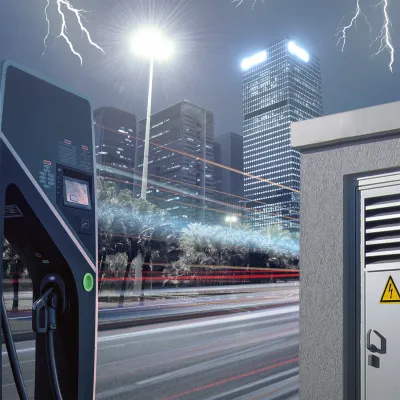
Recognizing the Warning Signs Before Equipment and Pump Failures
Most operators have seen these problems before:
- SCADA communication drops after a storm.
- A pump or lift station disappears from the network, then reconnects later.
- VFD faults occur without an obvious mechanical issue.
- Level or pressure readings become inconsistent after a lightning event.
- One station has recurring communication problems, while others operate normally.
- RTUs, radios, or instrumentation require repeated resets or replacement
These symptoms often point to the same underlying issue: transient voltage repeatedly stressing sensitive electrical and control equipment.
Do These Problems Sound Familiar Across Your Pump and Lift Station Network?
Use the Lift Station Surge, Lightning, and Grounding System Audit Checklist to identify which of your stations may be vulnerable before the next storm.
Download the Audit Checklist
What Causes a VFD to Trip During or After a Lightning Storm?
Not every VFD trip is caused by a mechanical problem.
Transient voltage created by nearby lightning, utility switching, or switching events inside the station can disrupt the drive's electronics. In many cases, the drive protects itself by faulting or shutting down temporarily.
Once power stabilizes, the fault may clear. But if the same station continues to experience nuisance trips during storms, generator transfers, or switching events, the electrical environment deserves closer attention.
Can Surge Damage Happen Without Visible Equipment Failure?
Yes. Many transient events do not destroy equipment immediately. Instead, they can gradually weaken sensitive electronic components over months or years.
A telemetry radio that repeatedly loses communication, an RTU that requires frequent resets, or a pressure transmitter that fails earlier than expected may all be signs of cumulative surge exposure.
Looking for patterns—not just isolated failures—can help identify stations that would benefit from improved electrical protection.
Reduce Emergency Callouts by Identifying Vulnerable Stations
Operators usually know which pump and lift stations generate the most after-hours calls. They are often the same stations that lose communication during storms, experience recurring VFD faults, or require repeated maintenance on control equipment.
Understanding where transient voltage enters a station is the first step toward reducing unnecessary troubleshooting and improving long-term reliability. DEHN’s pump and lift station guidance explains why these locations are especially vulnerable, while SCADA and PLC protection resources show how transient voltage affects the control systems operators depend on every day.
Request a Pump/Lift Station Surge Risk AssessmentSupport Preventive Maintenance with a Pump/Lift Station Surge Risk Assessment
If certain stations continue to experience the same electrical problems, it may be time to look beyond the equipment that is failing and evaluate the pathways allowing transient voltage into the system.
Pump/Lift Station Surge Risk Assessment from DEHN helps identify vulnerable power, communication, grounding, bonding, and instrumentation pathways that may contribute to recurring SCADA outages, VFD trips, telemetry failures, and unplanned downtime.
The assessment helps utilities understand where additional protection may improve reliability, maintain visibility, and reduce emergency response.
Ask About a Pump/Lift Station Surge Risk AssessmentFrequently Asked Questions
Why Does My Lift Station Keep Losing SCADA System Connection After Storms?
Nearby lightning activity, utility switching, and transient voltage can disrupt RTUs, PLCs, telemetry radios, and communication circuits. Even without a direct strike, these events can interrupt communications and cause stations to disappear from SCADA.
What Causes a VFD to Trip During or After a Lightning Storm?
Transient voltage can interfere with the electronic controls inside a VFD, causing nuisance faults or temporary shutdowns even when no mechanical problem exists.
Can Surge Damage Happen Without Visible Equipment Failure?
Yes. Repeated low-level transient events can gradually degrade sensitive electronics, leading to recurring faults, shortened equipment life, and premature component replacement long before a catastrophic pump failure occurs.